Built this week · I didn't know about that
Does your AI answer you the same way twice?
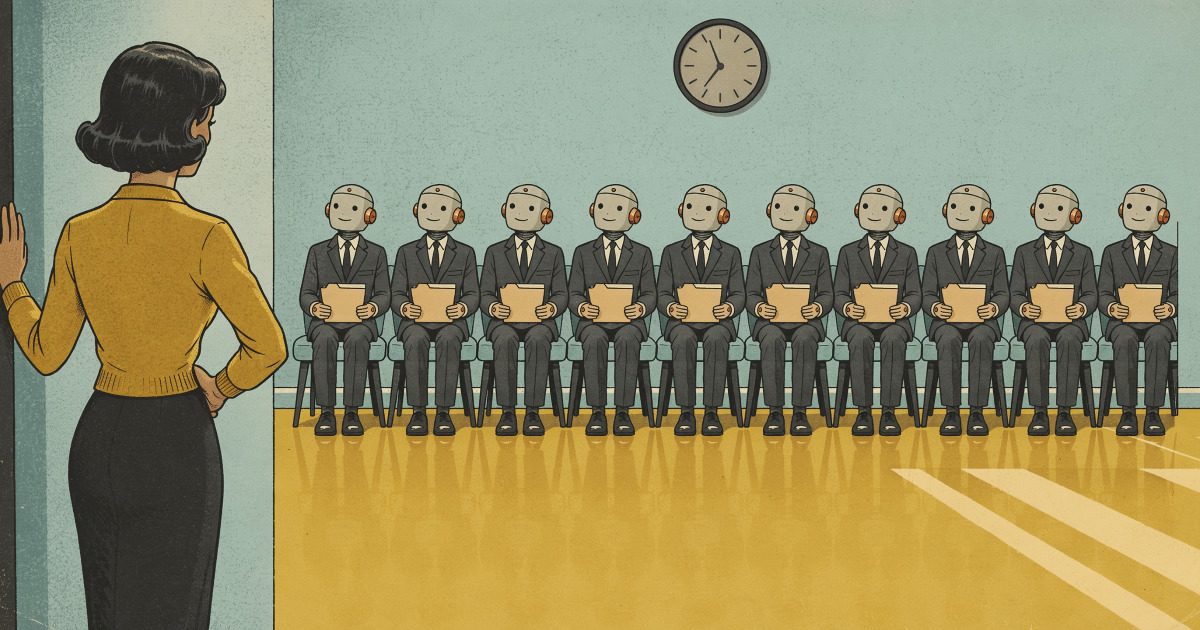
Ask AI the same thing twice and you can get two different answers. I knew that'd be a problem for my Audit, so I tested for it.
What I set out to test
When I do an Audit, I sit with you and your team and go through how the work really gets done, job by job. Afterwards you get a written report. It sorts every job into what AI can take on, what it can do with someone checking, and what stays with your people, and it sets out your options with what each would cost.
Claude drafts that report from my notes and timings, following a written set of steps, and I check it. If the same notes could give a different report on another day, you couldn't rely on it. So before trusting those steps, I put them to the test.
How I tested it
I asked Claude to work through the same business ten times over, each one a fresh start, and see whether the answers matched.
I started with my own business, and the answers were all over the place. One go found 8 jobs and another found 15, and the highest total came to nearly five times the lowest. I thought using my own business was the trouble, so I asked Claude to make one up instead, with the right answer written down before the test began.
It made a seven-person accounting practice, as messy as a real one. Busy-season hours are mixed in with a normal week's, and the same job goes by two names. Then it wrote down the right answer: three of the practice's jobs were worth building in Claude, taking on new clients, the ATO mail and billing.
Last, it wrote the practice up the way I'd bring it home from an Audit day, with the owner's and the staff's answers, the signed-off hours, and the checks of their AI tools and email. That went out for ten separate goes, with the right answer kept out of sight.
What went wrong, and the fix
All ten found the same three jobs. Then they worked out what each would cost, and only one of the ten got all three prices right.
So I asked Claude to find out why. Some of it was the steps themselves: a few lines could be read two ways. Some of it was the right answer. It had one partner's spreadsheet wrong, and it counted on details the notes didn't have. Both were fixed, and the ten went again.
This time nine of the ten matched. The tenth turned out to have the right total. It had added the charge for an extra Claude account, and the written answer had missed it.
Then came the harder test, a different kind of business. Claude made up an eight-person GP practice, read the health rules first, and wrote down the right answer: two jobs worth building, new patients and unpaid accounts. The steps stayed as they were. The target was eight of ten. All ten goes picked those same two jobs and landed on the same price.
What I learnt
The right jobs came up almost every time. Getting the prices to match took clearer steps, and the test caught slips in the written answer as well as in the steps.
What it could mean for you
If you use AI in your business, try giving it the same job twice. If the answers differ, that's worth knowing before you rely on it.
And if you're thinking of getting someone in to look at where AI fits in your business, ask them one question: if someone else looked at the same business, would they come to the same answer, and how would they know?
That's why I test the tools behind my Audit. I come to your office, sit with you and your team, and time the jobs with the people who do them. You sign off the hours. The report's drafted from those figures with steps built on these tests, and I check it before it comes to you.
If jobs like taking on new clients or chasing unpaid accounts eat into your week, the report sorts every one. You get the options, what each would cost and what it would save, including the ones that don't involve me, and you choose.
The workings
- How it ran: the written steps turn the notes from an Audit day into the report and its prices. On the two made-up businesses, each go was a separate run of Claude, with the same steps and the same notes, and the right answer left out of its copy.
- My own business, 22 and 23 Nov: the ten found 8 to 15 jobs, and the highest total was nearly five times the lowest. Its right answer was written after that go. A second go, after repairs, still split on what to fix, from 1 job to 4.
- Made-up accounting practice, 7 people, 23 Nov: 3 jobs worth building in the right answer. Go 1: 10 of 10 found the three, 1 of 10 had all three prices right, and 0 of 10 matched the total. Go 2: 9 of 10 matched the total. The tenth added a charge the right answer had missed, and its total turned out right. Go 3, with that charge added: 8 of 10. The other two treated two overlapping jobs as one and picked two to build. The steps don't settle that call yet.
- Made-up GP practice, 8 people, 23 Nov: 2 jobs worth building in the right answer. 10 of 10 matched, against a target of 8. One smaller figure, the payback time at the low end, matched in 5 of 10, and a line was added to the steps after.
- The right jobs, across both made-up businesses: 38 of 40 goes (10, 10 and 8 on the accounting practice, 10 on the GP practice).
- The accounting practice and the GP practice were made up for the test.
I set up Claude for small businesses in and around Toowoomba. See what the Claude Set-up covers, or how I work with local businesses.
Newsletter
A short email from me now and then about AI changes that matter to small businesses.
Sign up to the newsletter